
It’s been three years and one day since my last post, and so much has happened with work and life, that I think I’ll just have to drop snippets here and there to kind of sort of attempt to capture the gist. Coming back to community college did mean sacrificing conferences and professional development within the library world, but I’m making a difference, albeit slowly, with local matters.
I taught a three-unit credit course as a hybrid in Fall 2022, LRNR 30 Information Concepts and Research Skills. It was my first time teaching a credit course (most of my teaching is as a guest in the context of other courses), and my class was small, but I worked hard on it, and the few students I had did make it fun. I actually had students conduct mini diversity audits on a portion of the library collection as the course project.
As a librarian, though, teaching the course wasn’t part of my load, so I taught it as overload. It was just too hard on my family life to do again in the spring semester as my daughter was 1.5 years old. I might consider teaching it again as a summer class online (no competing work) or in-person during a spring semester (fall is overwhelming), but I would need to make some bigger changes and also change my current work priorities. Also, our course really doesn’t have a good return on investment; there are so few librarians to cover the regular work, and while our course fulfills a general education requirement for the California State University, it will no longer count starting in 2025. California is moving to a single general education pathway for transfer admission to the California State University and University of California (Cal-GETC), which is great news for students, but our class will now only count as an elective, and students have a lot of choices when it comes to electives. One of my colleagues and I do have ideas, but given our staffing, we’re staying put for a little while.
After getting a local $25,000 grant the previous academic year, in Fall 2022, a colleague and I also launched Merced College’s first attempt to incentivize faculty to move to Zero Textbook Cost (ZTC) resources, the ZTC/OER Faculty Incentive Program. The program ran out of money at the end of Fall 2023, which was projected. We had a librarian vacancy all of 23-24 as my colleague who was our Open Educational Resources (OER) lead resigned from her position last August, so I just couldn’t do much more last year. I haven’t even put the student or faculty results from our Spring 2023 or Fall 2023 surveys into a report, which covers the inaugural class of faculty. This is one of my goals for Fall 2024. Luckily, the training my colleague and I created will get reused. I need to make some changes to the training, but it seems like I will be able to launch it and use other money for faculty stipends this academic year. I also served as the college’s ASCCC OERI liaison in 23-24 and got Creative Commons certified in December 2023.
It’s been a little slow-going as there aren’t many folks available to dedicate time to OER with all of our college’s initiatives. Our community college also has an inclusive access program–the program was implemented right after my colleague and I received news about our grant. While I have been contributing where I can, I don’t think I can do much more solo.
I got tenure in Spring 2023! You would think I’d share this first, but it was not something I was very worried about given the process. It still feels really good to have this behind me, though.
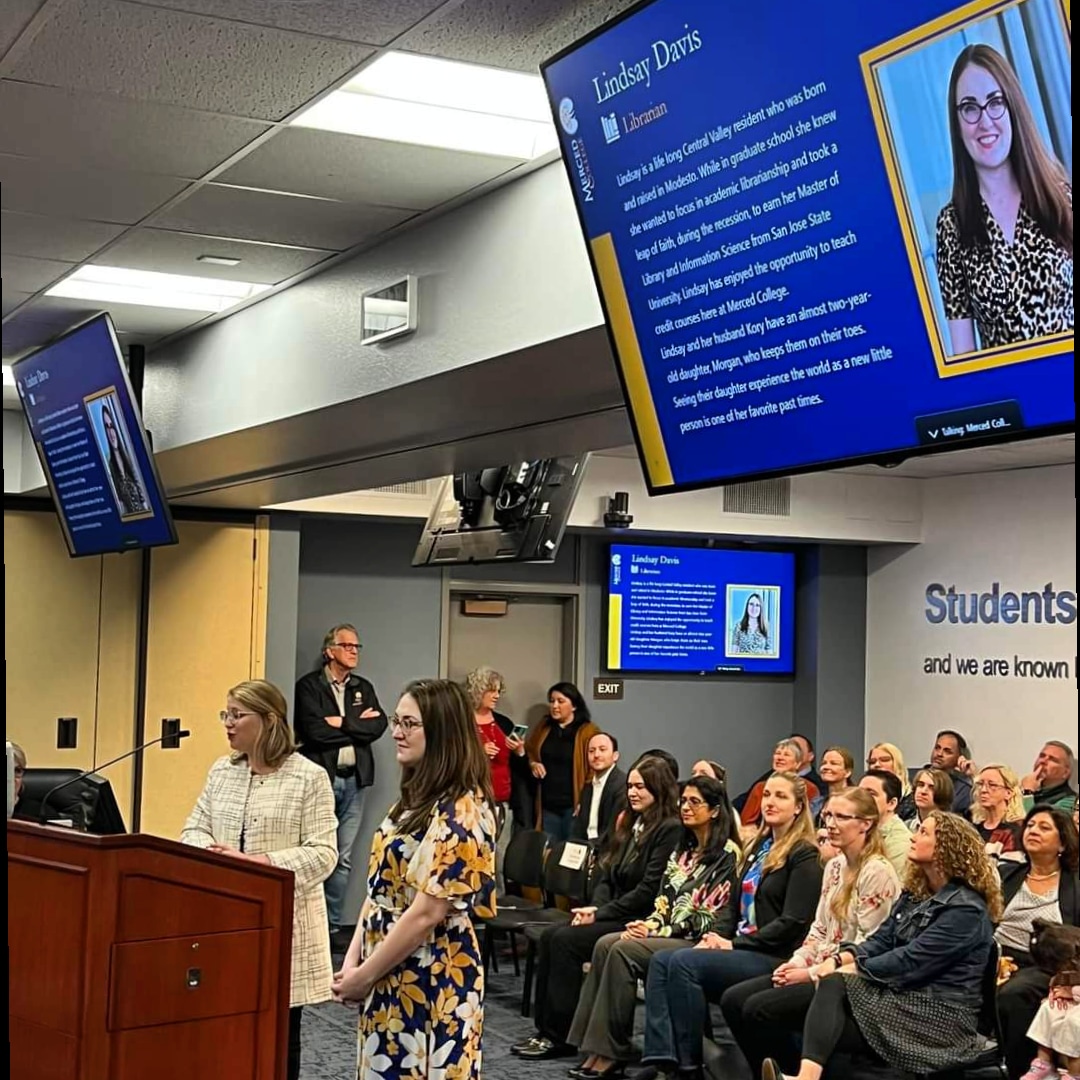
I’m embarrassed to share this in a blog post, but I also got nominated for Distinguished Full-Time Faculty of the Year this spring. The other candidates really are top-knotch, so, in this case, just being nominated really is nice. We already voted on this at the end of this spring semester, and I think they already let the winner know in advance of the reveal this next Friday during our in-service day.
My little baby is now a big three years old! My husband and I couldn’t be more proud of our bright little girl. This summer, I also got LASIK! I’m still a little nearsighted, which was the plan since I didn’t have a whole lot of tissue to work with, but it’s kind of amazing what I can see now. It’s been just over a month since I had the procedure.
Here’s to 24-25! I’m hoping to keep up in this space a little more.
 Lindsay Ann Davis