I had a huge surprise during our in-service day at Merced College on Friday. Convocation is a day devoted to updates, speakers, meetings, and recognition. This year, they announced there was a tie for Distinguished Full-Time Faculty Member of the Year for 2022-2023. One of the honorees is a very dedicated psychology and sociology professor at the Los Baños Campus where I first started my academic librarian career. I am really happy for him because he truly does deserve the commendation.
My eyes nearly popped out of my head when I discovered I was the second honoree!
Image by Leigh-Ann Thornhill
I’m really, truly so honored to be held in such high esteem by my colleagues across the district. Thank you! 😭💙💛 Librarians do make a difference, and I would be remiss if I didn’t mention that, last year, our Distinguished Part-Time Faculty of the Year was a librarian, my colleague Leigh-Ann.
When tracking the reach of the Merced College Library’s online instruction in Canvas became unwieldy, the librarians turned to LibWizard tutorials for use as assignments in Canvas modules. As modules are re-launched by individual faculty who have asked for content, librarians are able to monitor usage for the specific LibWizard assignments and tabulate information to input in LibInsights. While there is room for improvement, this has been successful for the small library faculty team.
(I would embed the poster here, but, apparently, WordPress doesn’t support Google Slides, so you’ll need to visit it at the DOLS website.)
It’s been three years and one day since my last post, and so much has happened with work and life, that I think I’ll just have to drop snippets here and there to kind of sort of attempt to capture the gist. Coming back to community college did mean sacrificing conferences and professional development within the library world, but I’m making a difference, albeit slowly, with local matters.
I taught a three-unit credit course as a hybrid in Fall 2022, LRNR 30 Information Concepts and Research Skills. It was my first time teaching a credit course (most of my teaching is as a guest in the context of other courses), and my class was small, but I worked hard on it, and the few students I had did make it fun. I actually had students conduct mini diversity audits on a portion of the library collection as the course project.
As a librarian, though, teaching the course wasn’t part of my load, so I taught it as overload. It was just too hard on my family life to do again in the spring semester as my daughter was 1.5 years old. I might consider teaching it again as a summer class online (no competing work) or in-person during a spring semester (fall is overwhelming), but I would need to make some bigger changes and also change my current work priorities. Also, our course really doesn’t have a good return on investment; there are so few librarians to cover the regular work, and while our course fulfills a general education requirement for the California State University, it will no longer count starting in 2025. California is moving to a single general education pathway for transfer admission to the California State University and University of California (Cal-GETC), which is great news for students, but our class will now only count as an elective, and students have a lot of choices when it comes to electives. One of my colleagues and I do have ideas, but given our staffing, we’re staying put for a little while.
After getting a local $25,000 grant the previous academic year, in Fall 2022, a colleague and I also launched Merced College’s first attempt to incentivize faculty to move to Zero Textbook Cost (ZTC) resources, the ZTC/OER Faculty Incentive Program. The program ran out of money at the end of Fall 2023, which was projected. We had a librarian vacancy all of 23-24 as my colleague who was our Open Educational Resources (OER) lead resigned from her position last August, so I just couldn’t do much more last year. I haven’t even put the student or faculty results from our Spring 2023 or Fall 2023 surveys into a report, which covers the inaugural class of faculty. This is one of my goals for Fall 2024. Luckily, the training my colleague and I created will get reused. I need to make some changes to the training, but it seems like I will be able to launch it and use other money for faculty stipends this academic year. I also served as the college’s ASCCC OERI liaison in 23-24 and got Creative Commons certified in December 2023.
It’s been a little slow-going as there aren’t many folks available to dedicate time to OER with all of our college’s initiatives. Our community college also has an inclusive access program–the program was implemented right after my colleague and I received news about our grant. While I have been contributing where I can, I don’t think I can do much more solo.
I got tenure in Spring 2023! You would think I’d share this first, but it was not something I was very worried about given the process. It still feels really good to have this behind me, though.
I’m embarrassed to share this in a blog post, but I also got nominated for Distinguished Full-Time Faculty of the Year this spring. The other candidates really are top-knotch, so, in this case, just being nominated really is nice. We already voted on this at the end of this spring semester, and I think they already let the winner know in advance of the reveal this next Friday during our in-service day.
My little baby is now a big three years old! My husband and I couldn’t be more proud of our bright little girl. This summer, I also got LASIK! I’m still a little nearsighted, which was the plan since I didn’t have a whole lot of tissue to work with, but it’s kind of amazing what I can see now. It’s been just over a month since I had the procedure.
Here’s to 24-25! I’m hoping to keep up in this space a little more.
Last December, I was struggling with the transition back to community college libraries after a whirlwind research university library experience. It had been three months, and I was worried I had made a mistake. When COVID happened and the library shut down for regular services, I found myself feeling useful again and able to throw myself into what needed to be done. One of my colleagues and I worked really hard this spring, summer, and fall to make changes. You can read about what we worked on in “Pivoting Library Services in a Pandemic: Merced College Library Steps Up to the Challenge,” which was published in the December issue of the CCL Outlook, the newsletter for the Council of Chief Librarians, California Community Colleges. There were many basic needs the library had prior to the pandemic, so some of what has changed will continue when we return to campus.
Our library is also going to experience other major changes in Fall 2021; academic and student support services are moving into the building. I’ve been pretty quiet about my feelings about it among colleagues, but I welcome the changes. I’m sure there will be bumps in the road as we figure out how things will work, but in the end, I think this will actually be a positive change.
However, I am a little worried about when changes will begin to be made since the full-time librarians are off contract over the summer. In any other summer, I wouldn’t mind being contacted, but I am going to spend this summer caring for a new baby and recovering from childbirth–my husband and I are expecting our first child in early May! I’ll be on maternity in April, so this doesn’t leave me a lot of time to help with any decision-making. I’ll just have to defer to my colleagues and go into fall knowing that things in my personal and work life are going to be different. Coming back to work in person in the fall will be challenging enough–leaving my baby, pumping, getting used to driving two hours a day again, etc.
Besides COVID and a baby on the way, another big surprise of 2020 is that the Library Outreach Cookbook was finally published this year! I had almost given up hope. My chapter (55) is about my experience using Smore to advertise new books when I worked as the solo librarian at the Los Baños Campus. I worked there full-time between August 2013 and May 2016, so this chapter is pretty dated. At the time, we had a really cruddy catalog and were using version 1 of LibGuides. Earlier this year, nearly all of the California community college libraries began using ExLibris Alma Primo, so it’s easy to create new book lists, and there are so many other tools that folks can use nowadays to show off new acquisitions.
I had really hoped to have written more posts this year, but like my reading goals, I didn’t have it in me. Just making it through the year was enough.
I clearly had no know idea how the rest of the 2019-2020 would turn out. I can’t possibly update the last 6+ months, but let’s just say that it’s been quite a workload since March. I can’ t believe it’s nearly July!
If you recall, I took on my role precisely to improve instructional services, and COVID-19 highlighted many of the critiques I have been making since returning to Merced College. While I was able to get more support, we’re 10-month faculty, so I’ll have to start some of this advocacy work again in August.
I worked remotely from March 20 until the end of the spring semester. (The week we went remote was fraught with tension; it involved some disparity between the library faculty and the faculty in other discipline.) I was able to make a OneSearch tutorial. (I actually had to make it twice; once in a trial of SideCar, and then a second time in LibWizard when we finally got the add-on to our Springshare subscription in May.) I was also able to make three Canvas modules:
Understanding & Finding Databases
Selecting Databases by Subject
Using Basic Search Strategies
I wish I would have had time to help our librarians get up to speed on LibWizard and Canvas to be able to split up the other materials that we need to make, but we all just didn’t have time. I started an instruction guide in the fall, and I have been adding more documentation and materials in preparation for Fall 2020, as we’ll do some of this work when we come back in August, though it will more than likely be remote.
Prior to the spring semester ending, a colleague and I also started working to populate the library website. The website got a big update a couple of years ago, but there were places that hadn’t been developed yet. We’ll continue to work on it remotely this summer and in the early fall. Our College also created a hub for students within Canvas for student and academic services, and my colleague and I were also able to provide a lot of input for the library’s hub space.
Summer school is online, and the library remains closed to the campus community. We are offering curbside pick-up, but, to be quite honest, print is not the big draw for learners. (I have a lot to say about this, but tenure track…). I did elect to work a couple weeks of summer school to staff the library chat, where the majority of questions have dealt with textbooks on reserve. This is such a huge deal in community college libraries, and while folks do use OER here, it’s not as far-reaching. My last day of summer school is on Tuesday. As part of my advocacy efforts, I was also given 75 hours of additional time this summer to work on instructional projects. I have worked some of these hours already adapting an MLA Canvas module. When summer school is over, I’ll pick this up again. I’ll also be working on an APA and evaluation module.
I’m also taking a 9-week online course through Merced College to be “certified” to teach online as part of the California Virtual Campus Open Educational Initiative (CVC-OEI). The course helps faculty design the first six weeks of a fully online course. While I’m not scheduled to teach the library’s three-unit course LRNR 30 Information Concepts and Research Skills this fall, teaching a course for credit is a long-time dream of mine, and I would like to teach it in the next couple of years. Week 5 starts this week. It’s quite the workload, but it’s going well considering that I’m not exactly adapting a class I’ve taught before. My favorite unit so far is the accessibility unit because it reminded me of things I have learned before but forget to practice. It also helped me fix some LibGuides and other Canvas issues. I’m glad I decided to take the class.
After three years at the University of California Merced, I returned to Merced College in August, though to the main campus in Merced instead of Los Baños. It has not been an easy transition. My work / life balance is much better (I get winter, spring, and summer break again), but the problem is that I don’t what to do with myself. When folks ask me what I’m up to, I, frankly, don’t have much to say because, for so long, work has been my identity. In trying to make peace between the life I thought I wanted and this new trajectory, I haven’t been the easiest person to be around. Managing my anxiety and depression has been difficult. I am grieving.
I had imagined a life where I would be working on research and writing articles and book chapters, maybe even co-editing a book or two. Even though research wasn’t necessarily required at UC, I knew I would be part of a network of librarians engaged in this kind of work. When I was a solo community college librarian, I got involved in ACRL committee work, and it exposed me to folks doing great things in the profession. I felt less isolated. Slow but sure, my confidence grew. I continued this work at UC Merced. I finally got the courage to submit lightning talk proposals, and I actually presented at a few conferences, even though I didn’t feel like what I was sharing was groundbreaking. I even wrote a couple of short trade pieces.
In early 2018, as I was preparing for a two year review (for 18-months of work), I felt, strangely, unaccomplished. I was doing things but not THE THINGS. I was constantly busying myself and worrying about my review. Honestly, coming across Abby Flanigan’s blog post, “Vocational Awe and Professional Identity,” which was about Fobazi Ettarh’s article, “Vocational Awe and Librarianship: The Lies We Tell Ourselves,” made me realize that I had turned my job into a lifestyle. I had pushed myself, and I got the standard merit increase, which is the norm at UC, but when I learned that a colleague who wrote a book also got a standard review, I knew I couldn’t continue this pace. Ultimately, I had to ask myself whether this professional activity was actually that important.
But I am sad. I was able to grow as a teacher at UC Merced, and I learned a lot from my colleagues and from various professional development opportunities. I enjoyed our instructional brown bag sessions and various projects. I’m a better librarian because of my time there.
I know this change doesn’t mean that I can’t do some of those things I had previously imagined, but I also know that I want a life that isn’t consumed by the next best thing in academic librarianship. Though I will probably always be a bit of a workaholic, I want to lead a healthier life.
I’m currently on winter break, so I’ll be taking time to figure some things out.
In early May, I presented a lightning talk at the California Conference on Library Instruction about a lesson I designed for an upper-division Critical Race and Ethnic Studies course at UC Merced. I’m a little shy about sharing instructional materials, so this was actually the first time I shared a lesson plan and activity I’ve designed for a class with folks who aren’t my colleagues. I first designed the lesson in Spring 2018, and I’ve tweaked it a few times since then.
As promised at the conference, I got my act together and put up my lesson plan and materials on Project CORA. Let me know if I have typos or broken links. Of course, if you end up using or adapting this, I’d love to know, as well.
June 1 marked my third year at UC Merced, and it was the same day I was offered a Reference Librarian position at Merced College. If you’ve been here long enough, I worked for Merced College before but at the small campus one hour west in Los Baños. My first day at Merced College will be August 6.
I am grateful to have had the opportunity to work at UC Merced. During these last three years, I learned so much from my instruction colleagues, and I have become a more confident teacher. I’m now ready to take on the challenge of leading and expanding research education at the community college where I started my professional career just a few years ago. I’m excited to pursue some of the goals my former/soon-to-be current colleagues and I could only dream about six years ago.
I love graduation season. I love seeing pictures of folks in caps and gowns and reading posts about gratitude and accomplishment. (If you or a loved one just graduated, congratulations!) In the spirit of celebration and reflection, I started thinking about the library award committee I have been chairing the last two years and discovered that I never blogged about the first award cycle for the Abresch-Kranich Library Award, and the UC Merced Library just finished awarding the second set of scholarships this spring.
In 2018, we had two winners, Melissa Becerra and Nathan Parmeter. Each student received a $500 scholarship thanks to our donor, Arlene Kranich. You can read more about the award and our student winners in “New Scholarship Pays Homage to Persistence and Research.”
Last spring, my former Central Valley colleague Ray Pun also interviewed me about the award for the Credo Reference blog for the HIP (high-impact practices) in Action series. You can read the interview in “HIP in Action: Undergraduate Research & Awards.” It was great exposure for our library and UC Merced, and I hope the interview helped inspire other libraries.
After the second award cycle, I have a better idea of when and in what specific areas I need to ask for help. I also have ideas for changes to the workflow. I’m currently on vacation, but before I left, I started drafting my process with changes I might want to make regarding the timeline. The review and reception happens during the busiest time in the instruction season, and the process will go much more smoothly if we can open and close the application earlier. Currently, it opens Nov. 1 and closes Feb. 1, but opening it on Oct. 1 and closing it in mid-January will help me get the applications out to the five-member review committee more quickly. After a quick chat with the university librarian, he agreed with the earlier deadline, and we also determined that we should hold the reception before spring break, which is always in March. There are also some other changes I want to make, and I’m very thankful that two of my colleagues who have helped with reviewing student applications are interested in helping me streamline this process, which may also involve changing the award rubric. We’ll be doing this work in June.
Does your college or university library have a research award of some kind?
I couldn’t help the Marie Kondo reference. (I really enjoyed Season 1 of “Tidying Up.” I go through purging periods every so often, so I am here for it.)
The longer I am at my job, the better I am getting at figuring out a system to keep track of what I work on. Who knew that some simple templates and a planner could help me feel better during those moments of one-shot instruction fatigue? As I’m not involved with meaningful assessment, it’s challenging for me to see the long-term effects of the work I do, so documenting my activities helps keep me motivated.
After I received the final documentation for my first review, I created a template in Google Docs for the documentation that I am responsible for turning in (visit “UC Librarian Review Process“), and I’ll be in much better shape for my next review in January 2020 as I have been filling it out with more significant projects and partnerships as I go along.
For instruction, I typically put all of my classes into Outlook because our research appointment calendar syncs with Outlook, but I learned that it is miserable to go back into your calendar to figure out how many classes and workshops you taught during a particular semester. Our research instruction request forms are also connected to the system we use for submitting post-class statistics. The library’s programmer was able to enhance our system so that we can see which classes have not had statistics submitted, but once you submit, it’s clunky to run a query.
I created yet another template to help me out in Google Sheets: bit.ly/class_stats_template It has a tab for classes and a tab for workshops. The Guide column is the URL to the class LibGuide. Students refers to the number of students. The Stats Recorded column is just a note for myself as I submit statistics into our system because I sometimes let it pile up. The Google Folder column is the key to what I actually did in class, as it links to a folder in Google Drive that contains the class syllabus, research assignment, and my lesson plan. In Google Drive, I have a 2018-2019 folder with subfolders for Fall 2018 and Spring 2019. My basic folder structure looks like the following: Semester > Instructor Name > Course. It’s now super simple for me to find all the corresponding documentation for each class I taught. If you’re interested, I also started using a new lesson plan template that I adapted from another librarian: bit.ly/lesson_plan_template I’m bummed to say that I don’t remember who shared it, but I need to comb through some librarian listserv archives to find out because I really need to thank them!
Seeing some of my work reflected in my Classes & Workshops spreadsheet this past semester has made me feel a lot better.
When I worked at the community college, one of my librarian mentors suggested that I get a paper planner that has both a monthly and weekly format, so that I take brief notes about what I work on within the planner. This semester, I’m going to utilize a planner to reflect on my teaching. While I print my lesson plans and write on them during class, they can look pretty cruddy. I need to do a better job about writing down what worked, what didn’t, observations, etc. (On that note, I do plan to finally finish reading char booth’s Reflective Teaching, Effective Learning: Instructional Literature for Library Educators, though I think char is working on a new edition.)
I also feel like this could be a fun workshop at conference–sharing instructional planning materials and tools and methods for keeping track of work. Like New Year library programming but for academic librarians.


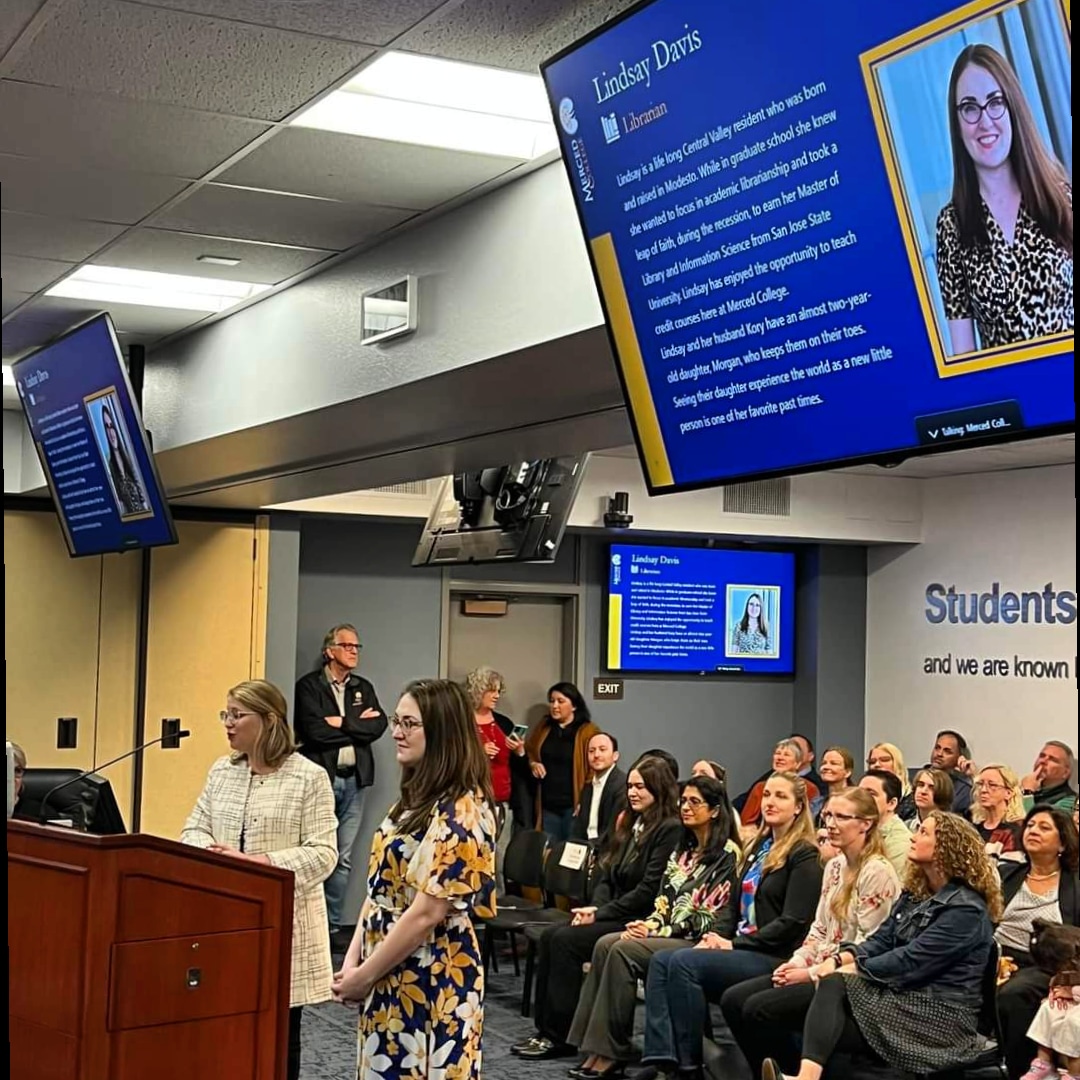


 Photo by

 Photo by
  Lindsay Ann Davis